A good viewing is less about spotting every possible mechanical fault and more about taking a consistent, unhurried look at the vehicle. Arrange to see it in daylight, allow enough time and take somebody with you if possible. If the seller rushes you or will not answer reasonable questions, be prepared to walk away.
Before the viewing
- Read the advert carefully. Save a copy and note the stated mileage, trim, service history, condition and included equipment. Ask the seller to clarify anything vague before you travel.
- Check the vehicle record. Use the registration to review available MOT information and confirm that the make, model, fuel type and colour match the advert. Start with MotorHarbour’s Check your car page.
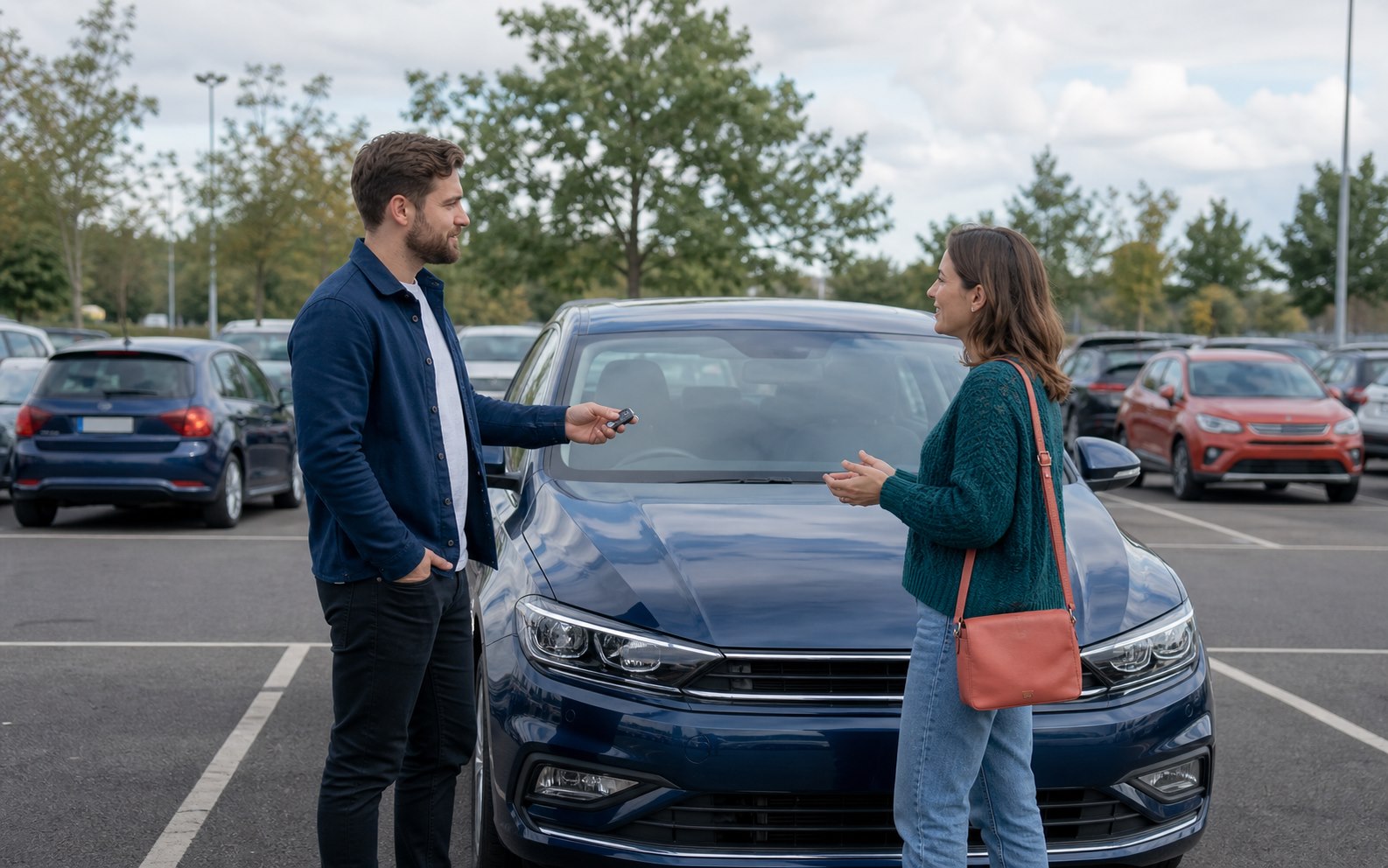
- Confirm who is selling. Ask whether the person is the registered keeper and why the vehicle is being sold. A private sale should normally take place at the address shown on the V5C.
Inspect the vehicle
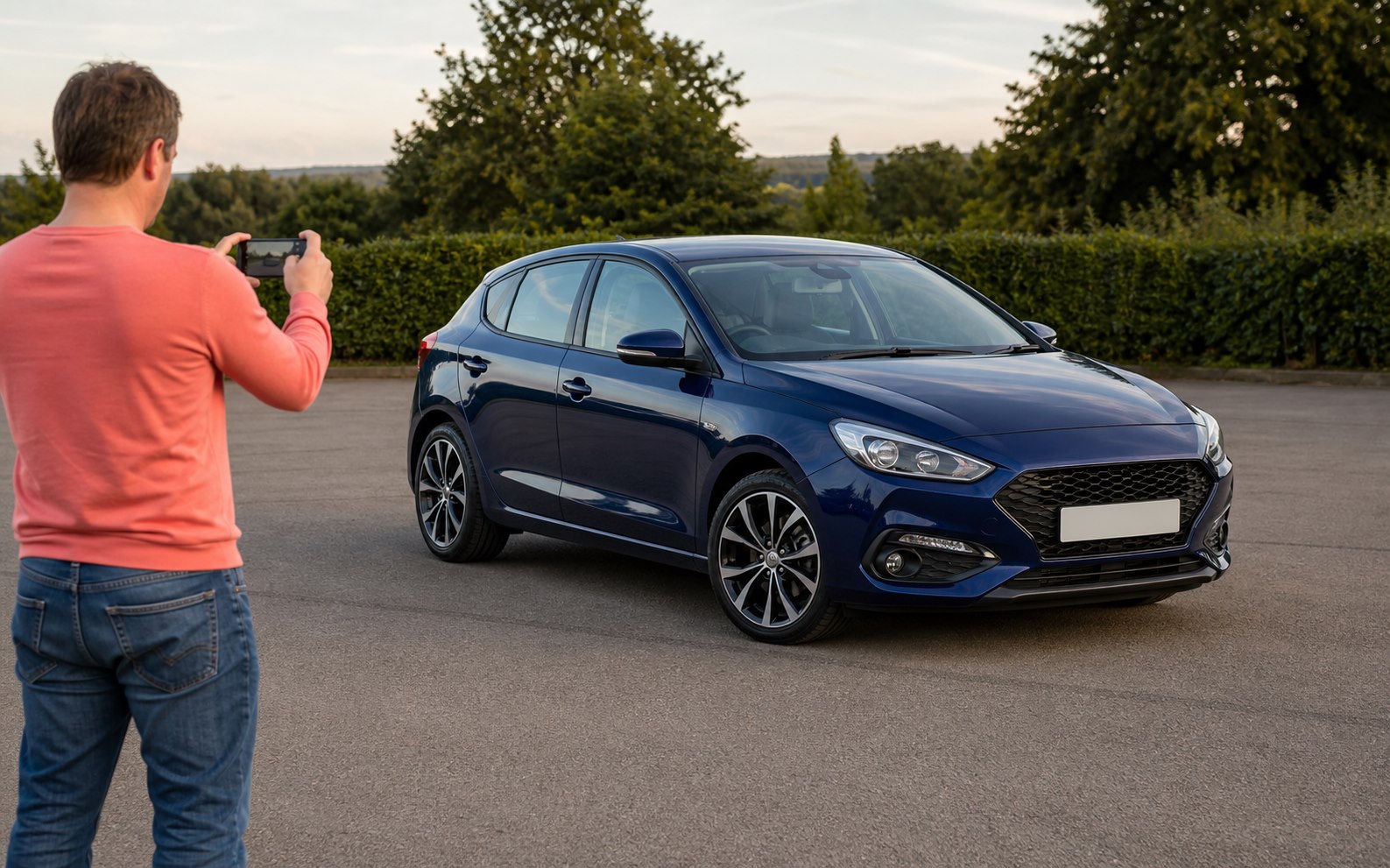
- Walk around the bodywork. Look along each panel from several angles for dents, uneven gaps, paint differences, rust and poorly matched repairs. Check the windscreen, lamps and mirrors too.
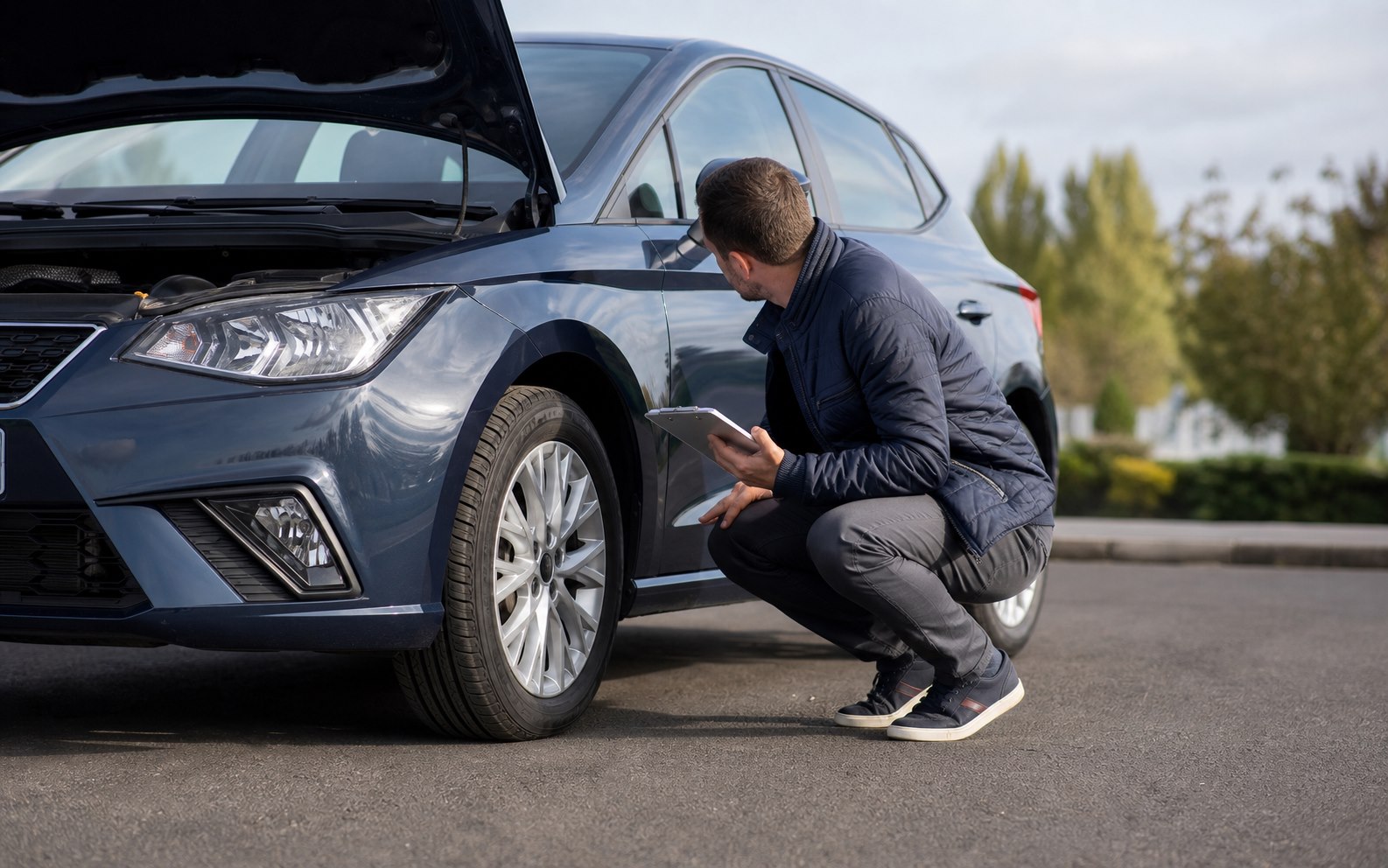
- Check every tyre and wheel. Look for damage, cracking and uneven wear. Tyres worn more heavily on one edge can point to an alignment or suspension issue that deserves closer investigation.
- Look underneath and under the bonnet. Check for fresh leaks, damaged components and very low fluid levels. If possible, ask for the engine to be cold when you arrive so you can see how it starts from rest.
- Try the cabin and equipment. Check seatbelts, windows, locks, lights, ventilation, infotainment and warning lamps. Make sure the displayed mileage matches the advert and paperwork.
Drive, documents and decision
- Take a meaningful test drive. Confirm that you are insured, then try normal town speeds and a faster road where safe. Listen for unusual noises and pay attention to steering, brakes, clutch, gearbox and warning lights.
- Match the paperwork to the car. Check the registration and VIN against the V5C and service records. Review invoices, MOT history, spare keys and handbook, and independently investigate any finance or provenance concerns.
- Pause before paying. Add up any immediate tyres, servicing or repairs and compare the vehicle with similar adverts. Do not let a deposit or artificial deadline replace the checks you intended to make.
This checklist cannot replace a professional inspection. If the vehicle is high value, unfamiliar or shows warning signs, consider asking a qualified independent professional to inspect it before purchase.